Where to stay in Dordogne for a first trip
The best Dordogne base is the one that protects the days you care about. Sarlat, the Vézère Valley, Bergerac, and Périgueux solve different trips, so choose the route before the property.
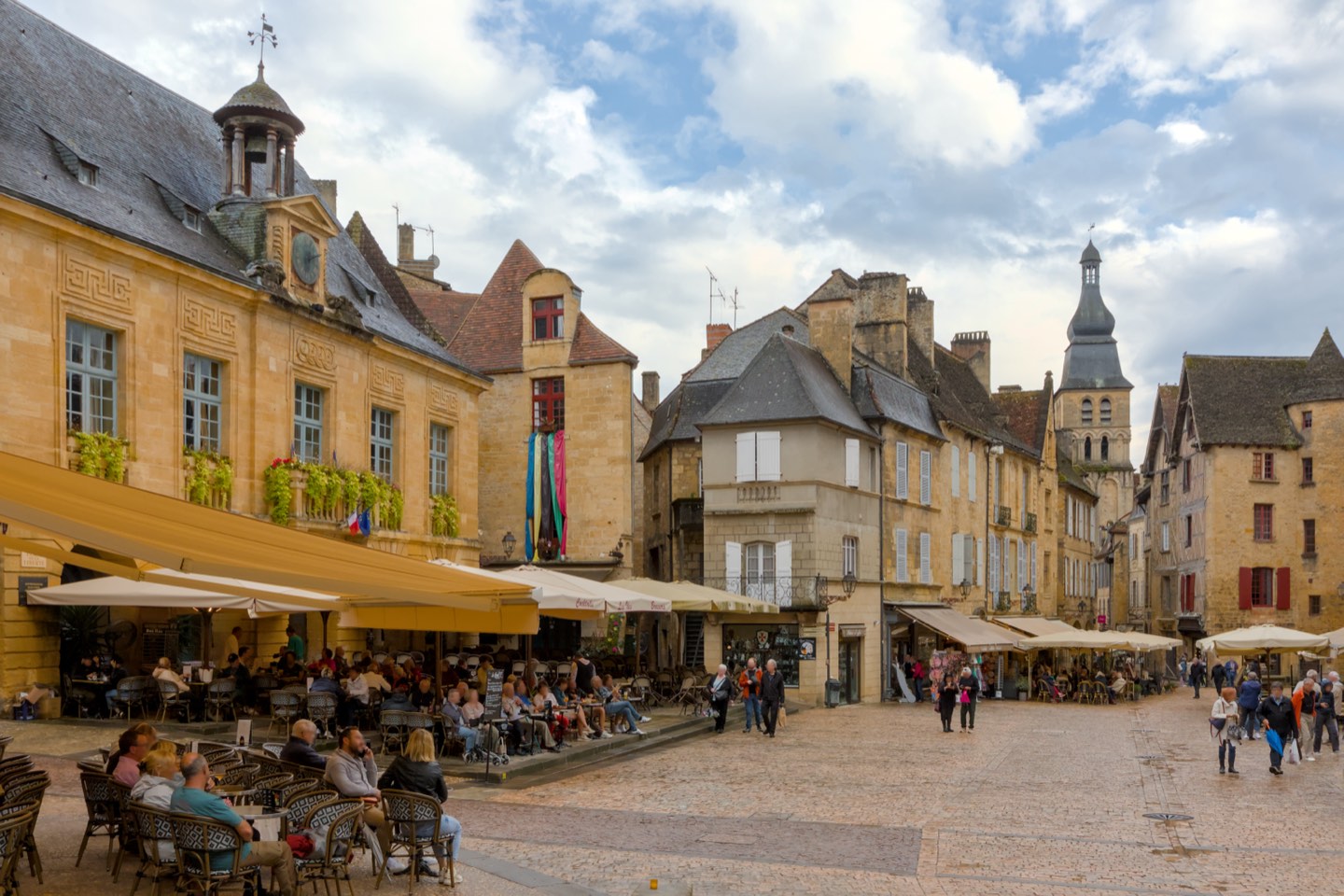
Use Sarlat for a first Périgord Noir base
Sarlat gives a first trip a strong market-town centre, atmospheric evenings, and practical access toward the Dordogne river villages and castles. It is the clearest all-round base when the route is centred on Périgord Noir rather than the whole department.
Move toward the Vézère for a cave-led trip
Montignac-Lascaux, Les Eyzies, and nearby villages reduce repeated drives when prehistory is the main reason for coming. This base is quieter and more specialised than Sarlat, but stronger for several cave and museum days.
Choose Bergerac or Périgueux for a different axis
Bergerac suits wine country and the western Dordogne, while Périgueux suits the department's civic and Gallo-Roman layer. Neither is the default base for a tightly focused Sarlat, river-castle, and Vézère itinerary.
What each base suits, and how it works without a car.
Pick the row that matches the main story of the trip. If you will not be driving, the car-free line shows what the regional rail and coach timetables actually connect.
Sarlat
Suits: A first trip centred on Périgord Noir: market-town evenings and practical access to the river villages, castles and the Vézère.
Without a car: The strongest car-free base: trains to Bergerac, Bordeaux and Périgueux, coach 335 to Souillac and year-round coach 336 to Lascaux IV.
Les Eyzies or Montignac (Vézère Valley)
Suits: Several cave and museum days with fewer repeated drives, and quieter evenings than Sarlat.
Without a car: Les Eyzies has a station on the Périgueux line. Montignac has no station, but coach 336 links it with Lascaux IV, Sarlat and Périgueux.
River villages: Beynac, La Roque-Gageac, Domme
Suits: A quiet stay with the river, castles and views close by, when you will drive to markets, caves and other sights.
Without a car: Weak without a car. Regional summer coaches run in July and August only; at other times, plan taxis, guided days or a bike.
Bergerac
Suits: Wine country and the western Dordogne, including Monbazillac.
Without a car: Line 33 trains to Bordeaux and Sarlat, and coach 330 to Périgueux in about an hour.
Périgueux
Suits: Gallo-Roman Vesunna, the civic old town and a well-connected city base.
Without a car: The rail hub: trains to Bordeaux, Limoges, Brive and Les Eyzies, plus coaches to Bergerac and, via Montignac, to Lascaux IV.
Car-free access checked against the TER Nouvelle-Aquitaine and Région Nouvelle-Aquitaine timetables on 2 October 2026. Plan the car-free version
Common mistakes that weaken a Dordogne trip.
These are planning guardrails. Current openings, cave access, transport, tickets, market days, and route conditions still need an official check.
Booking an isolated property before checking every evening and driving requirement.
Using one base for Sarlat, Bergerac, Périgueux, and northern Périgord on a short trip.
Choosing scenery alone when the route has timed cave entries or frequent restaurant returns.
Keep the Dordogne route connected.
Continue by the decision that remains: base, pacing, transport, geographic clusters, or food and wine.
A first-trip Dordogne itinerary without rushing the region
Build a first Dordogne itinerary around Sarlat, the Vézère Valley, river villages, and castles with one coherent cluster per day.
Dordogne without a car: what works and what becomes difficult
Understand the limits of a car-free Dordogne trip and decide whether a central base, planned transfers, guided days, or car hire fits the route.
How to combine Dordogne caves, villages, castles, and river days
Group Dordogne's Vézère prehistory, Sarlat, river villages, and castles into realistic geographic clusters instead of a scattered checklist.
Loire Valley or Dordogne
Compare train access, the need for a car and the number of nights before committing to a countryside base.
Check current details with official sources.
Cave entry, castle access, market days, wine visits, transport, and seasonal conditions can change. Use the sources below before fixing timed plans.
- Dordogne Périgord TourismeDestination-level Dordogne and Périgord framing, villages, markets, food, and route context.
- Sarlat TourismeSarlat-la-Canéda, Périgord Noir, markets, and medieval town context.
- UNESCO World Heritage Centre: Prehistoric Sites and Decorated Caves of the Vézère ValleyWorld Heritage context for the Vézère Valley, decorated caves, and prehistoric significance.
- Lascaux official siteLascaux II, Lascaux IV, visitor access, and cave-art interpretation.
- Vesunna Gallo-Roman MuseumGallo-Roman Vesunna, Petrocorii, and Périgueux historical context.
- Vins de Bergerac et DurasBergerac, Duras, Monbazillac, appellations, terroirs, and wine-culture context.
- Vesunna: opening hoursSeasonal opening hours and closure days.
- Dordogne Périgord Tourisme: getting around without a carTER lines, regional coaches, summer lines, bikes on trains and station assistance in the Dordogne.
- Regional coach 335 Souillac–Sarlat: timetableCoach times between Souillac station and Sarlat, with the connecting Paris and Toulouse trains.
- Regional coach 336 Sarlat–Montignac–Périgueux: timetableCoach times between Sarlat, Montignac, the Lascaux IV stop and Périgueux.
- Regional coach 330 Bergerac–Périgueux: timetableCoach times between Bergerac and Périgueux stations.
Current checks
Confirm openings, tickets, access rules, transport, and seasonal conditions with the organisation responsible for each place.